Posts

Shmini (Leviticus 9:1-11:47) April 10, 2021/28 Nisan 5781

Image
In 2015, I spent nine months teaching English to middle school students in Weifang, Shandong Province, China. Part of my responsibility was to also teach about English speaking culture and American culture in particular. To that end, near the end of November, I taught my students about Thanksgiving. On the title slide of the PowerPoint, I had a clipart image of a dancing turkey. As soon as I opened the presentation, in nearly all 14 of my classes, I was greeted with choruses of "fire chicken, fire chicken." You see, the Chinese word for a turkey literally translates to "fire chicken" (from the vibrant color of the bird's head). Turkeys, being native to the Americas, don't play a big part in Chinese cuisine. However, despite not being native to the Middle East either, Israelis eat more turkey per capita than almost any country in the world. It might, therefore, come as a surprise that turkeys were not always universally accepted as being kosher. In the sixth ...

A Special Pesach/Pirkei Avot D'var Torah

Image
So, for the past half a year, I've been posting every week about the weekly Torah portion. This week is a little different. Because this Shabbat falls during Pesach, the weekly cycle of Torah reading gets put on pause. For that reason, I chose to write this week's D'var Torah on a different topic. During the six weeks between the end of Pesach and Shavuot, it is customary to study Pirkei Avot, one chapter a week, every Shabbat. In the Ashkenazi world, this study takes place at Mincha, but the Sepharadim study right in the middle of the morning services. I had been exposed to quotes from Pirkei Avot growing up, with such highlights as Hillel's tripartite maxim: "If I am not for myself, who would be for me? If I am only for myself, what am I? And if not now, when?" But until a few years ago, I had never really explored the actual text, even though it is pretty short, so I had only a superficial understanding of what it actually was. Pirkei Avot is a compendium o...

Tzav (Leviticus 6:1-8:36) March 27, 2021/14 Nissan 5781

This week's reading, Tzav, details the ceremony of ordaining and installing Aaron and his sons as priests. Part of the ceremony involves the slaughter of a ram which was offered as an ordination sacrifice, and the meat of which the newly ordained priests were to eat during their week-long seclusion in the Tabernacle. The description of this slaughtering is unique not in word choice or in spelling, but in the metatextual function of the cantillation. When the Torah is read publicly as part of the synagogue service, it's chanted using a system of notation developed in the tenth century (different communities developed different musical motifs, but the symbols are consistent). In addition to indicating the melodies used for the words, the markings - called "ta‘amim" in Hebrew, which means something like "sense" or "meaning" - indicate where the stress in a word falls and also function as a sort of punctuation. There's a whole taxonomy of different...

Vayikra (Leviticus 1:1-5:26) March 20, 2021/7 Nisan 5781

Image
Welcome to the Book of Leviticus! Parashat Vayikra is mostly concerned with the specific procedures surrounding the most common sacrifices offered by Jews up until the destruction of the Second Temple in the year 70. While most of us know that offering animal and vegetable sacrifices was pretty common in the ancient world, the idea of worshipping God by slaughtering and burning animals is still a little odd for us in the 21st century. Why would God command such a bloody and sometimes wasteful (the standard daily sacrifices were burnt in their entirety, meaning that each day, at least two lambs were going to waste, not to mention any special offerings for holidays) form of worship? And if sacrifices are so important to God, why would they be discontinued in the absence of the Temple? It's quite perplexing. Thankfully, the Jewish bookshelf has a guide for us. In the Guide for the Perplexed, Maimonides discusses the origin of sacrifices in Judaism. He explains that God never really  w...

Vayakhel-Pekudei (Exodus 35:1-40:38): March 13, 2021/29 Adar 5781

In this week's double-feature parashah, we read about the construction of the Tabernacle. In the last couple of weeks, we heard about God instructing Moses as to what to do, and this week, Moses puts those instructions into action, appointing master artisans to oversee the project. But first, he repeats the command to keep Shabbat. Many commentators understand this juxtaposition as a demonstration of the fact that even the sacred work of building the Tabernacle does not take precedence over Shabbat. Others use this verse to derive the understanding that each of the 39 categories of "labor" prohibited on Shabbat are connected in some way to the tasks surrounding the construction of the Tabernacle. But perhaps there is something to be learned here as well about the role of Shabbat in our lives. The great theorist of cultural Zionism, Achad Ha'am, famously opined that "more than the Jews have kept the Shabbat, the Shabbat has kept the Jews." While there is room...

Ki Tisa (Exodus 30:11-34:35) March 6, 2021/22 Adar 5781

Image
A month ago, we read about God proclaiming the Ten Commandments to the assembled Israelites. But what we read was just that, the voice of God speaking the words of the Commandments. The familiar scene of Moses descending Mount Sinai with the tablets only appears in this week's parashah. As Moses is making his way down to the camp, he hears celebration and singing. When he arrives at the base of the mountain, he finds the Israelites worshiping a golden calf that Aaron had made for them. Moses confronts his older brother about what is going on, and Aaron tells him, "You must realize that the people have bad tendencies. They said to me, 'Make an oracle to lead us, since we do not know what happened to Moses, the man who took us out of Egypt.'" Moses understands from this that Aaron had actually kept the most ardent of the mob from going wild. Not everybody in the camp was really invested in replacing God, but enough were that it didn't matter. Sacha Baron Cohen i...

Tetzaveh (Exodus 27:20-30:10) February 27, 2021/15 Adar 5781

Image
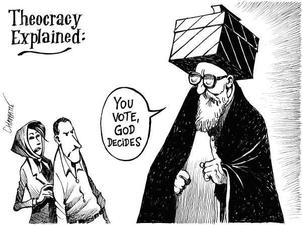
The ancient world saw a natural connection between temporal and spiritual leadership. In some societies, the roles of king and high priest were one and the same, and even where there was a division, the king still wielded divine authority as either the descendant of the gods or as their personal representative - something which even lasted into the twentieth century, with the Emperor of Japan only repudiating his alleged descent from the goddess Amaterasu in 1946 (the exact meaning of the Humanity Declaration is rather unclear and outside the purview of this blog, but the Showa Emperor did declare that he was not a divine incarnation). This wasn't the case for the Israelites.  In this week's parashah, Moses is given instruction about making priestly vestments for Aaron and his sons and for the ceremony in which they are to be ordained as the priests. Even with their new office conferring religious power as the administrators of the sacrificial cult, Aaron and his descendants do...